The Stuffing Stress Test: Six Recipe Similarity Apps Tried to Out-Grandma My Grandma
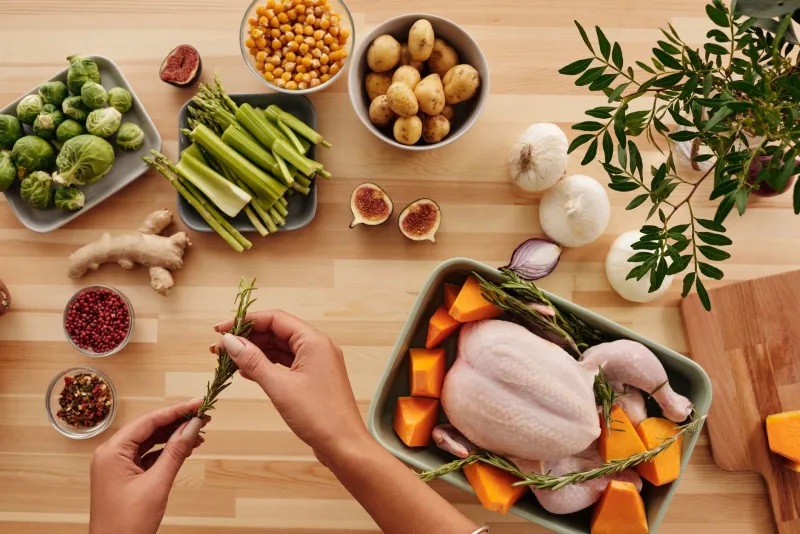
At Similaar, we usually spend our time asking what makes two things alike: photos, products, songs, homes. This week, the thing was stuffing. My grandma's stuffing, specifically. It lives on a yellowed index card with lines like enough bread, a lot of celery, and sausage if we have it. That is not a recipe so much as a vibe. Which made it perfect bait for six recipe-similarity apps.
The pitch was simple. Thanksgiving 2026 is three weeks away. I wanted an app that could look at Grandma's card, a photo of the finished dish, or a URL from a nearby recipe and suggest something close enough to matter but smart enough to adapt. Then I wanted it to handle vegetarian swaps, gluten-free bread, grocery pricing, and the only test that counts in my family: a blind taste test with relatives who have opinions about celery.
The Seed Recipe Was a Beautifully Bad Data Set
Grandma's card does not list oven temperature. It does not list a pan size. It says to tear the bread and let it sit out, which I now understand is both a instruction and a threat. I typed what I could into each app, uploaded a photo of the card, and pasted a URL from a similar sausage-and-herb stuffing recipe when a tool asked for one.
The six tools were RecipeRipple, PantryPatch, SpoonSimilar, DishDNA, NextPlate, and TableTwin. I picked them because they all claim to find similar recipes rather than just search by keyword. Some lean on photos. Some lean on ingredient lists. One kept asking me to make an account, which is its own kind of stuffing.
How I Judged Similar
I did not care which app returned the most recipes. I cared about four things: ingredient logic, dietary adaptation, grocery realism, and whether the finished dish tasted like Thanksgiving instead of a Pinterest board.
Ingredient logic meant the app understood that stuffing is bread plus fat plus aromatics plus stock, and that sage is not a garnish. Dietary adaptation meant it could swap sausage, chicken broth, butter, and bread without turning the recipe into a different food group. Grocery realism meant the app could estimate what the missing ingredients would cost at a normal US store, not a fantasy co-op in a beach town. Flavor was the final filter.
Dietary Swaps Separated the Pack
This is where the apps started to reveal their personalities. DishDNA went hard on substitutions and suggested a vegetarian version with mushrooms, walnuts, and vegetable broth. It sounded smart. It tasted like a forest floor with croutons.
SpoonSimilar was excellent at reading the photo of Grandma's card, but its swaps were vague. It said use gluten-free bread and adjust liquid. Adjust how? By how much? It was like asking a cousin for directions and getting turn near the big tree.
PantryPatch and TableTwin were the two that asked useful follow-up questions. PantryPatch wanted to know whether I needed the swap to be dairy-free as well as vegetarian. TableTwin asked how much the bread mattered. That sounds like a weird question until you realize gluten-free bread drinks stock differently and can turn stuffing into pudding. TableTwin adjusted the liquid and added a note to toast the bread longer. That is the kind of small, unglamorous detail that wins a holiday.
Grocery Pricing Was the Reality Check
I priced the missing ingredients at my local Kroger and a nearby Target, then compared the apps' estimates. RecipeRipple was the most optimistic. Its basket came in about $14 under what I actually spent, mostly because it assumed I already had fresh herbs and broth. I did not. NextPlate was the most expensive estimate and the least specific. It basically told me Thanksgiving costs money.
TableTwin and PantryPatch were within a few dollars of my real total. TableTwin broke out the cost of sausage, broth, celery, onions, and bread, which made it easy to see where the money was going. PantryPatch was close but lumped everything into a single grocery estimate. Useful, not illuminating.
The Blind Taste Test Got Personal
I cooked the top four recipes and kept Grandma's original as the control. My relatives did not know which was which. Aunt Denise immediately announced she could tell by smell. Uncle Ray asked if there was a prize. Cousin Maya, who is vegetarian, was the only person who took the assignment seriously.
The results were not subtle. The TableTwin version was the closest to Grandma's: crisp edges, soft middle, enough sage to register but not enough to announce itself. PantryPatch was a close second, and its vegetarian version won Maya's vote. SpoonSimilar produced a fine stuffing that tasted like it had been described to someone over the phone. RecipeRipple's version was creative and completely wrong for the assignment. NextPlate was pretty but bland. DishDNA was the only dish that started a debate about whether walnuts belong in stuffing. They do not. That is not a similarity-engine problem. That is a family problem.
The Final Ranking
- TableTwin. Best balance of similarity, swaps, pricing, and flavor. It felt like it understood the recipe's intent, not just its ingredients.
- PantryPatch. Best dietary adaptation and a strong vegetarian option. Its grocery estimate needed more detail.
- SpoonSimilar. Great at photo input, weak on precision.
- RecipeRipple. Good ideas, too much drift from the source.
- NextPlate. Easy to use, forgettable results.
- DishDNA. Confident, creative, and occasionally reckless with nuts.
What This Says About Similarity Engines
The best recipe app did not simply find recipes that looked like Grandma's card. It found recipes that behaved like it. That is the same lesson we keep running into at Similaar: similarity is not a list of overlapping features. It is a guess about intent. TableTwin won because it treated the recipe like a living thing with constraints, not a word cloud with butter. Thanksgiving 2026 is still three weeks away. My family has already asked me to make the winning stuffing again. Grandma says we are all overthinking bread. She is probably right. But the stuffing was good.